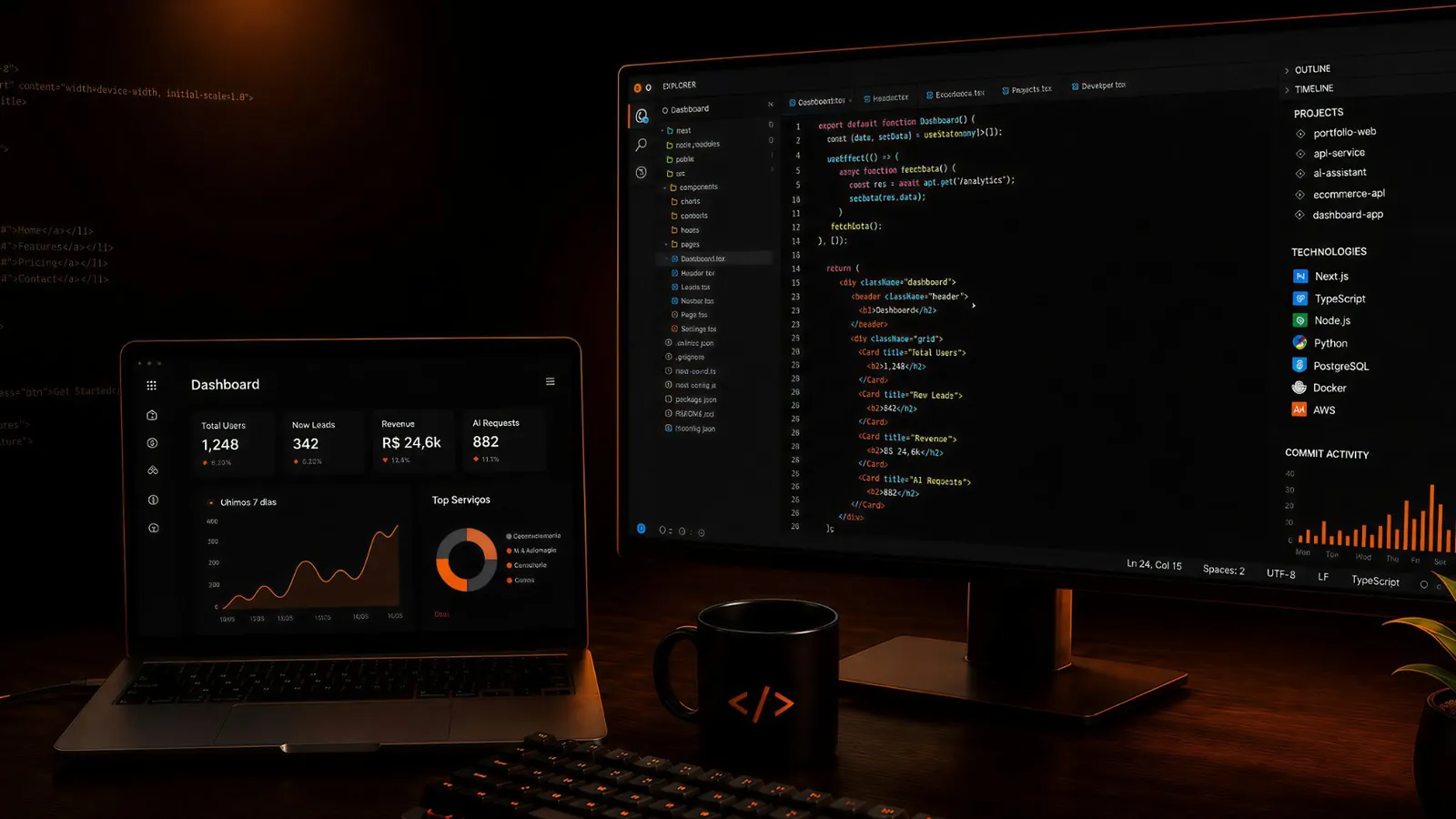
Full-Stack Development
Full-stack web application development, end to end
When a website has to do real work, such as handling accounts, requests or records, it needs more than pages. We design the frontend, the server logic and the data layer together so the application behaves consistently for your users. Some businesses need a working application rather than a brochure site. Examples include a customer portal where clients log in to see their documents, a booking flow with availability rules, or a tool where staff update records that customers can view. Full-stack development covers the visible interface, the logic behind it and the database that stores the information.
Capabilities
Key features and how they help
Workflows that follow your process
Screens and steps are arranged the way your team actually works.
Role-based access
Where needed, each user sees only what their role allows.
Maintainable structure
The code is organised so new features can be added without rebuilding the system.
Clear error handling
Users see understandable messages instead of unexplained failures.
The problems
What this service solves
Manual workflows slow the team
Spreadsheets and messages handle tasks that should follow a defined, repeatable process.
Systems do not talk to each other
Information is re-entered between tools, which causes delays and mistakes.
Off-the-shelf software does not fit
Generic tools force you to change how you work instead of supporting it.
How it works
A practical implementation process
Discovery
We map the workflows, users and information the application must handle.
Architecture
We agree the data model, user roles and main technical structure.
Iterative build
The application is built in stages, with reviews after each stage.
Testing and launch
We test the full workflows, fix issues and deploy the agreed version.
What we deliver
Clear deliverables, agreed before work starts
- Workflow mapping and requirements
- Interfaces for each user role
- Server-side business logic and input validation
- Data model and database integration where included in the scope
- Testing, handover documentation and deployment
Use cases
Typical situations where this service helps
Internal portals for staff or partners
Booking, appointment or request management
Client-area or membership applications
Benefits
What changes for your business
- Fewer manual steps and less re-entry of data
- One consistent system instead of several disconnected tools
- A foundation that can grow with the business
Industries
Industries this service can be designed for
These are example use cases, not claims about past clients.
- Hospitals & ClinicsAppointment enquiry forms, department and doctor information pages, and patient-friendly contact options.
- Schools & Coaching ClassesCourse and batch information, admission enquiry forms and a simple place for announcements.
- Logistics ProvidersService coverage pages, quote forms and, where scoped, workflow tools such as shipment enquiry or status lookup.
- StartupsQuick-to-launch sites, product landing pages and API-backed first versions that can grow with the product.
FAQ
Questions about Full-Stack Development
Straight answers on scope, cost and what to expect.
No. A database is included only when the application needs to store data and it is part of the agreed scope.
Yes, where it is part of the scope. Login, role permissions and password security are designed into the application from the start.
It depends on the workflows, roles and integrations. We estimate timelines after planning and deliver in agreed stages.
Related services